Showing posts with label fine motor skills. Show all posts

Friday, October 28, 2011

Maze - Available 3rd Week of November

Maze is classic play that has been around since ages. And maze is still one of favorite tools for researchers and educators until now. Do you want to know WHY ? Click here for more information about maze
Suitable for age 3 years old and above

Aquarium Maze AVAILABLE  S$15

Farm Maze  AVAILABLE  S$ 15

Butterfly Maze  AVAILABLE  S$ 17

Pre-writing maze AVAILABLE S$ 15

Lacing Board - AVAILABLE 3rd Week of November

Stimulate fine motor skills especially for pre-writing .
Suitable for age 2 years and above

Rabbit lacing board for beginner AVAILABLE  S$ 8

Penguin lacing board AVAILABLE  S$ 8

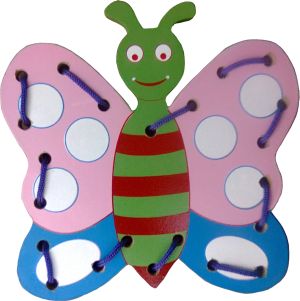
Butterfly Lacing Board  AVAILABLE  S$ 8

Shirt lacing board for boys AVAILABLE  S$ 8

Gown lacing board for girl AVAILABLE S$ 8

Colorful Building Blocks - AVAILABLE 3rd Week of November

It's a MUST Toys for young kids, do you want to know why ? Click here for the answer

26 pcs blocks AVAILABLE  S$ 18

Car blocks AVAILABLE  S$ 18

3D Animals Puzzle - AVAILABLE 3rd Week of November

There are selection of 3D Animals puzzle from 3 pcs to 8 pcs.
Stimulate fine motor skills, problem solving, as well as learning color
Suitable for age 1 yr old and above

3 pcs puzzle AVAILABLE  S$ 10

3 pcs puzzle AVAILABLE  S$ 6

4 pcs puzzle AVAILABLE  S$ 10

6 pcs puzzle AVAILABLE  S$ 10

7 pcs puzzle AVAILABLE  S$ 10

8 pcs puzzle AVAILABLE  S$ 10

Monday, October 10, 2011

Playdough mat apple tree

Let's make apples either red or green apple from playdough and put them into the trees

Monday, October 3, 2011

The importance of fine motor skills


What is Fine motor skills ?

this skill involves small muscles of the body that enable such functions such as writing, eating, grasping small objects, and fastening clothing.
They involve strength, fine motor control and dexterity

Fine motor skills Development Milestones
Age 0 - 3 months
  • Hands most often remain closed
  • Can retain an object if placed in palm
  • Can play with hands
  • Can plays with some baby toys that produce sound
Age 3 - 4 months
  • Can reach for objects on purpose but inaccurately
  • Clasps hands together often
Age 4 - 8 months
  • Can hold small objects in hand
  • Can pass objects from one hand to the other
  • Can pick up medium sized object easily
  • Sometimes places objects in mouth
  • Can use pads of fingertips to grasp small objects
  • Can pull objects out of container
Age 8 - 10 months
  • Develops accurate forward and side reach
  • Can use fingers, palm, whole hand to scoop up cereals, raisins etc.
  • Can drop or release objects intentionally
  • Can place objects in containers
  • Can pull a string to activate a toy
Age 10 - 12 months
  • Can pick up small objects using fingers
  • Can point with index finger
  • Can place one peg into a hole repeatedly
Age 12 - 18 months
Can hold a crayon with whole hand

Age 2 years
  • Can hold a crayon with thumb and fingers
  • Can put on shorts, socks, and shoes
  • Can takes off shoes and socks
  • Can use a spoon
  • Can draw and copy a vertical line
  • Can stacks large objects
Age 2.5 - 3 years
  • Can string large beads
  • Can cut paper with scissors
  • Can roll clay into “snake”
  • Can draw and copy a horizontal line
  • Can throw a ball
Age 3 - 3.5years
  • Can complete simple puzzles
  • Can build a tower of nine small blocks or more
  • Can get himself or herself dressed and
  • undressed independently; only needs help with buttons and zippers; sometimes still confuses front or back for clothes, and right or left for shoes
  • Can feed himself or herself with little or no spilling, drinks from a cup with one hand
Age 3.5 - 4 years
  • Can string small beads
  • Can pour drink from a pitcher if not too heavy
  • Can hold a pencil with 3 fingers, but moves forearm and wrist to write, draw and color
Age 4 - 4.5 years
  • Can use scissors to cut both straight and curved lines
  • Can manage snaps, buttons, and zippers
  • Can draw and copy a cross with one vertical and one horizontal intersecting line
Age 4.5 - 5 years
  • Can hold fork using fingers
  • Can feed soup with little or no spilling by himself or herself
  • Can fold paper in half, making sure the edges meet
  • Can put a key in a lock and open it
Age 5 - 6 years
  • Can get dressed completely by himself or herself
  • Can tie shoelaces
  • Can use a dull knife to cut soft foods
  • Can draw and copy a diagonal line
  • Can cut square, triangle, circle, and other simple pictures with scissors
  • Since small muscles of hand have developed, can use a “tripod grasp” with thumb & tips of 1st two fingers and uses fingers only to write, draw and color
  • Can copies simple shapes
  • Can cut out complex pictures accurately following the outline
  • Can copy a sequence of letters and numbers correctly
  • Can complete complex puzzles

By 6 years old, children’s fine motor skills have developed sufficiently enough to complete feeding, dressing and writing tasks properly and efficiently. They have developed adequate skillfulness in the use of the hands and body, their bilateral coordination and eye-hand coordination are developed well to complete cutting and writing tasks. Children will continue to develop and refine these skills; however the foundation is laid down within the first six years. This is why parents should assure that your child’s fine motor skills developed are in the normal range during your child’s early childhood.

Parents can do a lot of things to help your child’s fine motor skills develop, to provide your child sufficient crayons, papers, toys, games, and activities and let him or her practice and enhance these skills during his or her early childhood are crucial for your child’s future success in both personal life and professional life.

Stimulating Fine motor skills for baby and toddlers


Remember fine motor skills are developing and children are building a critical foundation for future fine motor skills abilities within the first 6 years of their life
Infant, toddler and preschool need to develop fine motor skills so they are able to write, dress, and play independently.

Fine motor skills stimulating activities for Infant

1. Rattles and Teethers
shake, bang, reach and hold

2. Banging Activities
* banging two toys together
* pound-a-ball toys
* banging hands on high chair
* toy workbench and hammer toys
* musical instruments

Fine motor skills stimulating activities for toddlers

1. Bubbles
* pop bubbles by clapping
* pop bubbles by poking
* have child place bubble wand in and out of containers
* try to catch bubbles on the wand

2. Stacking
* rings
* blocks
* books
* cookies
* lego
* cups
* small empty containers
* small cardboard boxes or empty shoe boxes

3. Eye - hand coordination
* Insert pennies into coin bank
* Insert wooden shape into respective whole (shape sorter)
* puzzle
* peg boards
* books / touching books
* activity table
* ball play

4. Paper activities
* Rip the paper until it's small

5. Painting activities
* Stamping using vegetables
* Scribble using brush
* Finger painting

Fine motor skill stimulating activity for Preschoolers
1. Play dough or clay
* roll into ball or snakes
* use shaped cutters, rolling pins, and garlic press
* play dough factories

2. Stringing and Lacing
* large beads
* colored macaroni

3. Paper activities
* use ripped paper to fill in/paste onto a pre-drawn shape
* use kids scissors to cut out simple shapes or strips of paper
* use small manipulatives to create a collage or picture
* make paper chains

4. Dressing Activities
 * "learn to dress" dolls, boards, and puzzles
* zipper and snap toys
* put clothes on dolls

5. Strengthening  Activities
* use a spray bottle to squirt colored water on picture or snow
* use hole punches
* push pegs into clay
* cut cardboard
* mix ingredients for baking/cooking

6. Pre-writting activities
* use tweezers to pick up small objects or cotton balls
* open/close ziplock bags
* use an eye dropper to make pictures with colored water by dripping drops of water on paper towels, tissue paper, or coffee filters
* roll up balls of cookie dough, tissue paper, or play dough

Naturally, the age of the child will determine which preschool, toddler, or infant fine motor activities you use. The outcome, however, will be the same; developing the important muscles of the hand and wrist to allow for precise hand control and strength, but HOW you get there will be different.

Have Fun Playing !

Friday, September 30, 2011

Pre scissor skills


Toddlers like to copy adults as well as cutting activity with scissors.
When fine motor skills have been developed well, why don't let your preschooler kids try using this pre scissor aid

Pre writing skills


This is the beginner stage of practicing writing especially for preschoolers who are going for kindergarden stage soon.

Pre writing skills


Approaching kindergarden, most of kids will have interest in writing. Instead of jumping into writing, why don't let them practice with this pre-writing aid

Thursday, September 29, 2011

Car Lacing


This car lacing is to stimulate fine motor skills for writing preparation

Wednesday, September 28, 2011

Playdough Mat


Fine tune your kids fine motor skills by playing playdough in this mat